

Master of Arts in Sustainability
BE A PART OF THE SOLUTION WITH A DEGREE IN environmental and social SUSTAINABILITY
The Master of Arts in Sustainability (MASUST) is designed to prepare students to lead change initiatives designed to enhance environmental performance, convert economic development into sustainable development, and increase environmental sustainability in all human systems. Students learn to simultaneously search for the underlying causes of global environmental, economic, and social problems while also learning to design and lead initiatives that produce sustainable outcomes for the current and future generations.
At A Glance
 Class Settings
- On Campus
- Evening

Start Dates
- Fall Entry: August
- Spring Entry: January

COURSE INFORMATION
- 36 Credits
- Complete in 21 Months Full Time

TUITION
All costs can be found at hpu.edu/costs.

ADMISSION REQUIREMENTS
-
Online application with $55 fee (waived when attending an event or 1:1 consultation)
- Official transcript/s (bachelor’s degree or higher)
- Resume
- Online essay questions
- One letter of recommendation
- Additional requirements below
Request Info
Improve environmental outcomes with your MASUST from HPU
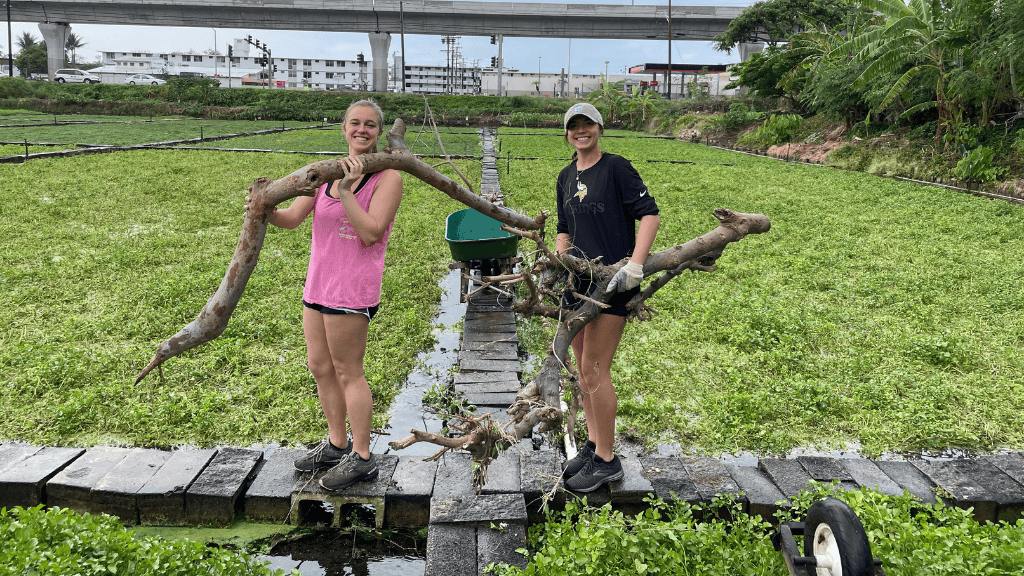
Service learning experiences are a key component of the MASUST program. Each semester students are given opportunities to give back to their local community and simultaneously learn about various ways organizations and individuals are working to make Hawaiʻi a more resilient and adaptive place. Partner organizations like Sumida Farm in Aiea are the perfect laboratory to learn about the critical importance of urban agriculture to creating vibrant urban environments.
Can Be Completed in 21 Months
SCholarships Available
Stem-Opt Eligible
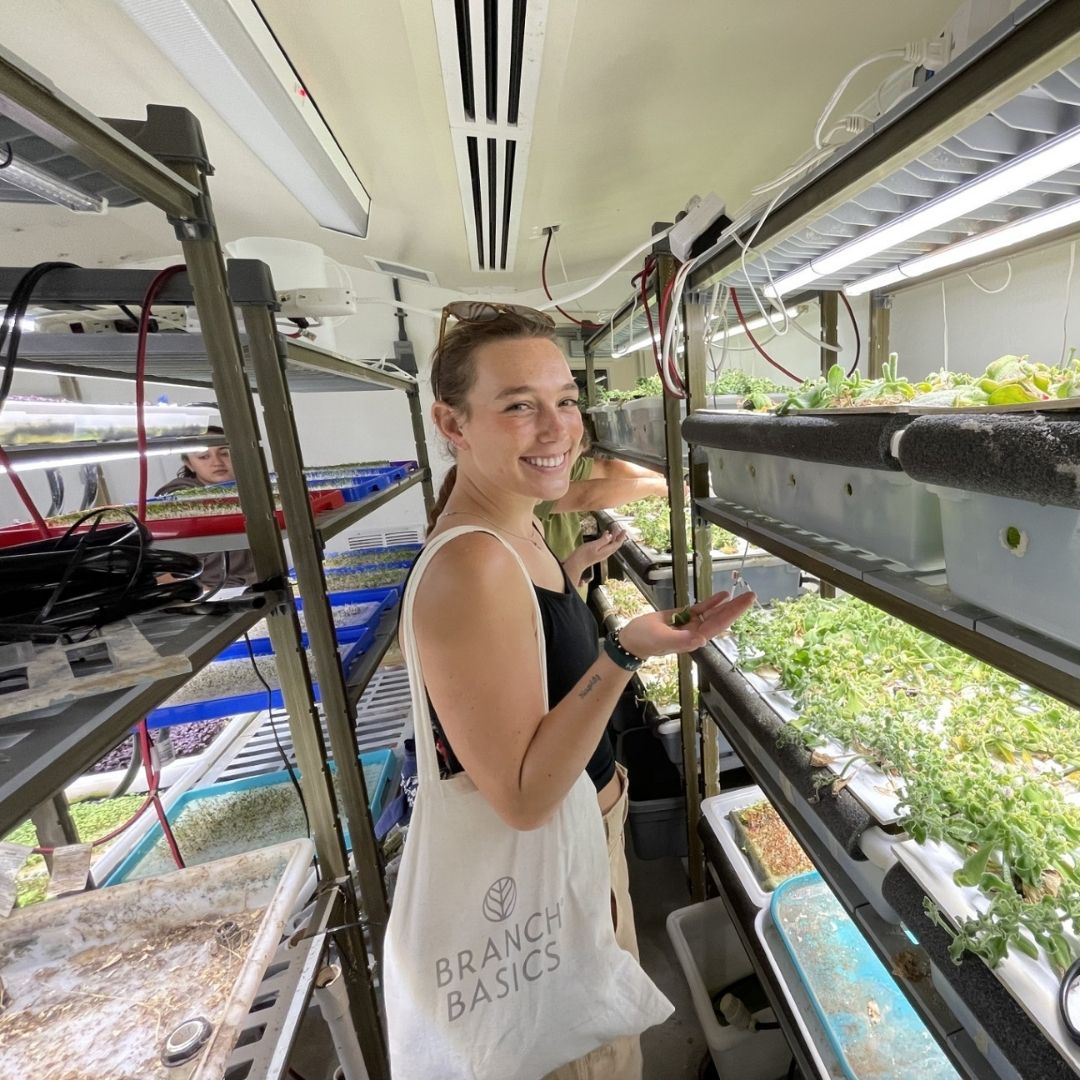
Learn by Doing with Skills-Based Learning
The MASUST program takes on the intersections of global and local challenges by equipping students to evaluate and (re-)produce resilient and sustainable responses. It does so by preparing students with the competencies needed to analyze and evaluate human-natural systems to develop and distribute both strategic and future-oriented solutions. Student cohorts collaborate with faculty and local stakeholders to search for the underlying causes of environmental, economic and social problems.
Curriculum & Courses Tailored to Career and Academic Pathways
The MASUST curriculum offers courses, internship opportunities, and service-learning experiences that emphasize academic rigor and skills based learning. Courses cover a range of topics that include sustainable tourism, sustainable cities, sustainability governance, industrial and ecological economics, systems thinking, and research methodologies. Internships and service learning opportunities are designed to connect students to professional communities to create transition synergies to their professional lives post degree. The capstone courses take students on an original empirical research journey that allows for a research focus generated by student interest based on identified issues in sustainability that demand investigation. Skills-based learning occurs in individual courses, supporting field elective options, internships, and service learning opportunities and, when available, summer field courses.
View estimated cost of attendance, hpu.edu/costs
The 36 credit hours are divided into 24 credit hours of core courses, 6 credit hours of research, 3 credit hours of internship or practicum, and 3 credit hours of a supporting field. The MASUST experience also enables students to study abroad, and to select from a variety of elective courses (2) from other M.A. programs (e.g. Marine Science, MBA, Organizational Development & Change, Public Health, Strategic Communication).
The new four-year sequence is as follows:
FULL-TIME ENROLLMENT, AUGUST ENTRY
YEAR 1 FALL SEMESTER (9 CREDITS)
- SUST 6000 Sustainable Human Systems
- SUST 6001 Seminar in Environmental Governance
- SUST 6005 Research Methods for Environmental & Social Policy
- SUST 6600 Colloquium: I Kaʻana Like ʻAna o Ka Ike (Pass/Fail no cost meets 4-5 times a semester
YEAR 1 SPRING SEMESTER (9 CREDITS)
- SUST 6310 Sustainable Tourism
- SUST 6320 Sustainable Cities
- SUST 6330 Industrial Ecology and Sustainability
YEAR 2 FALL SEMESTER (9 CREDITS)
- ENVS 6010 Global Climate Change
- SUST 6500 Ecological Economics and Sustainable Development
- SUST 7100 Professional Paper 1
YEAR 2 SPRING SEMESTER (9 CREDITS)
- SUST XXX Any Approved Program Elective
- SUST 6990 Internship or Practicum
- SUST 7200 Professional Paper II
FULL-TIME ENROLLMENT, JANUARY ENTRY
YEAR 1 SPRING SEMESTER (9 CREDITS)
- SUST 6310 Sustainable Tourism
- SUST 6320 Sustainable Cities
- SUST 6330 Industrial Ecology and Sustainability
- SUST 6600 Colloquium: I Kaʻana Like ʻAna o Ka Ike (Pass/Fail no cost meets 4-5 times a semester
YEAR 1 FALL SEMESTER (9 CREDITS)
- SUST 6000 Sustainable Human Systems
- SUST 6001 Seminar in Environmental Governance
- SUST 6005 Research Methods for Environmental & Social Policy
YEAR 2 SPRING SEMESTER (9 CREDITS)
- SUST XXX Any Approved Program Elective
- SUST 6990 Internship or Practicum
- SUST 7100 Professional Paper 1
YEAR 2 FALL SEMESTER (9 CREDITS)
- ENVS 6010 Global Climate Change
- SUST 6500 Ecological Economics and Sustainable Dev
explore HPU's Graduate Certificates
Global Leadership and Sustainable Development
This Graduate Certificate prepares students for leadership positions in organizations that transform globalization dynamics into sustainable economic, social, and environmental development practices and programs.
Environment, Policy, and Leadership
This Certificate is designed for students interested in understanding the impact of human activities on natural and environmental systems; designing policies to improve, remediate and restore environmental health; encourage sustainable development; and lead the organization and institutional changes necessary for successful policy implementation.
Sustainability and Security Studies
The program seeks to enhance student’s understanding of the highly complex intersections between contemporary sustainability and security challenges as well as examine various possible responses to such threats.
The Altruist Generation: Students and Sustainability in Hawaiʻi Nei
Join HPU's Strong Alumni Network
"Connections made through school or volunteering opportunities are invaluable. Once you're outside doing actual sustainability work, you're able to meet new people and talk with others who share your values and are passionate about sustainability."
Read Full Story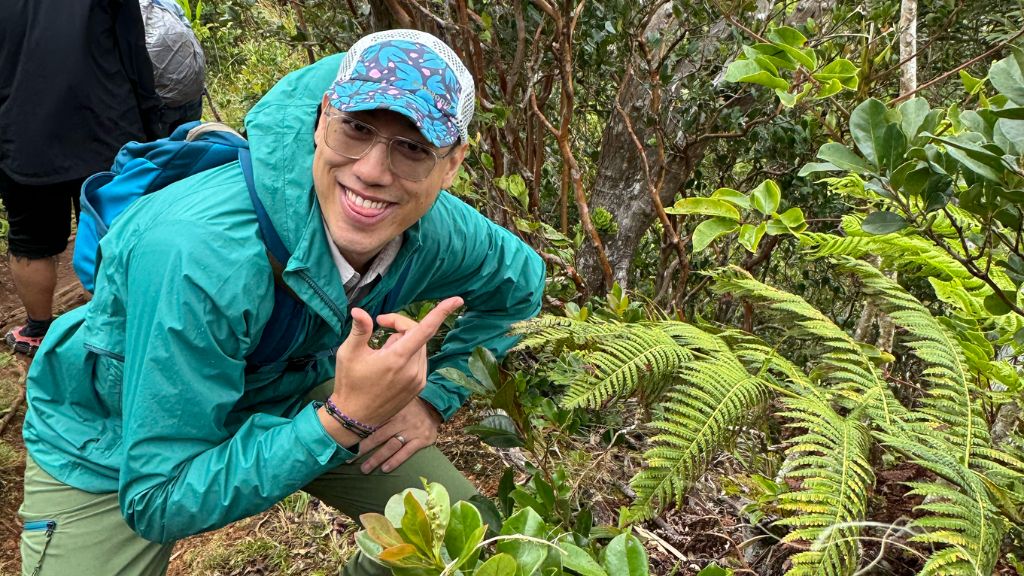
"I feel like the program made me more purposeful in life and is helping me to give back to the world that we as a global society are destroying, whether that is intentionally or unintentionally."
What types of industries do students go into after completing the program?
- Cultural Institutions
- Energy & Utilities
- Environmental Services & Equipment
- Government (Federal, State, Local)
- Environmental Engineering
- Planning and Analysis
- Energy and Sustainability
- Alternative Energy
- Policy Analysis and Planning
- Environmental and Climate Science
Recent program graduates enjoy rewarding careers at companies around the world, including:
-
Hawai‘i Department of Land and Natural Resources
- California Center for Sustainable Energy
- Pacific Northwest Laboratory
- Sierra Club
-
Norwegian National Rail Administration
-
Cincinnati Health Department
-
U.S. Department of Veterans Affairs
Career Outcomes for HPU MASUST Graduates
Success comes naturally to HPU MASUST alumni, including:
- Yuko Maruo ('20), Education Director, LbE-Hawaii, Honolulu
- Sierra Vaughn ('19) Forester Planner, Division of Forestry & Wildlife, Hawaii Department of Land and Natural Resources, Honolulu
- Darien Siguenza ('19) Program Coordinator, Los Angeles Cleantech Incubator
- Marvin Katz ('18) Trainee in Transaction Management, KFW Banking, Frankfurt, Germany
- Lauren Reichelt ('17), Clean Transportation Manager, Blue Planet Foundation
- Aaron McDonald ('14), Ph.D. student, University of Oregon, Lundquist College of Business
- Danielle Lien ('13), Coordinator, Green Climate Fund Agency at Conservation International
- Lauren Ballou (’12), Environmental Planner, Vanasse Hangen Brustlin, Inc. (VHB), Boston, MA
- Josh Prigge (’11), Director of Regenerative Development, Fetzer Vineyards
- Jonathan Chin (’10), Energy Analyst, DBEDT, Honolulu, HI
- Katie Fisk (’10), Disaster Reservist, FEMA, Denver, Colorado
- Yasser Alkhalaiwi (’10), Corporate, Litigation and Labor Lawyer, Omar Al Rasheed & Partners Law Firm, Riyadh, Saudi Arabia
Frequently Asked Questions
Q: What is HPU’s Master of Arts in Sustainability?
A: Hawaiʻi Pacific University’s Master of Arts in Sustainability, also known as MASUST, is a graduate program that prepares students to address environmental, economic, and social challenges through applied sustainability work. Students build knowledge in systems thinking, sustainability governance, climate change, sustainable cities, sustainable tourism, ecological economics, research methods, service learning, and professional practice.
Q: What can I do with a Master of Arts in Sustainability?
A: A Master of Arts in Sustainability can prepare students for careers that focus on solving environmental, economic, and social challenges across public, private, nonprofit, and international organizations. Graduates may pursue roles in sustainability planning, environmental policy, climate resilience, sustainable tourism, urban sustainability, energy and utilities, environmental services, research, nonprofit leadership, government, and community development.
Q: Who is the HPU MASUST program designed for?
A: The MASUST program is designed for students and professionals who want to build applied sustainability knowledge and leadership skills. It is a strong fit for working professionals, recent graduates, career changers, international students interested in STEM OPT eligibility, and students preparing for doctoral study in sustainability-related fields.
Q: How long does it take to complete the Master of Arts in Sustainability at HPU?
A: Full-time students can complete HPU’s Master of Arts in Sustainability in 21 months. The program requires 36 credits, including core coursework, research, internship or practicum experience, and supporting field coursework.
Q: What courses are included in the MASUST curriculum?
A: The MASUST curriculum includes courses in sustainable human systems, environmental governance, research methods, sustainable tourism, sustainable cities, industrial ecology and sustainability, global climate change, ecological economics and sustainable development, internship or practicum, and professional paper research. These courses help students connect sustainability theory with applied problem-solving. Students can review the sample degree plan for a full course sequence.
Q: Does the MASUST program include internships, practical experience, or service learning?
A: Yes. Applied learning is a key part of the MASUST program. Students complete service-learning experiences, collaborate with faculty and local stakeholders, and complete an internship or practicum designed to connect classroom learning with real-world sustainability challenges.
Q: Is HPU’s Master of Arts in Sustainability STEM OPT eligible?
A: Yes. HPU identifies the Master of Arts in Sustainability as STEM OPT eligible. International students should confirm current STEM OPT eligibility, program classification, and individual immigration requirements with HPU admissions or the appropriate international student advising office before applying.
Q: What are the admissions requirements for the HPU MASUST program?
A: Applicants to the MASUST program must submit an online graduate application, application fee, official transcripts showing completion of a bachelor’s degree or higher, a resume, online essay questions, and one letter of recommendation. Applicants who earned a bachelor’s degree or higher outside the United States must also demonstrate English proficiency.
Q: What prerequisites are required for the MASUST program?
A: Students entering HPU’s Master of Arts in Sustainability program should have foundational preparation in information tools, research methods, and social statistics. This preparation may be met through coursework in spreadsheets, databases, information tools, research methods, and social statistics, or approved undergraduate equivalents.
Because students enter the MASUST program from a variety of academic and professional backgrounds, applicants are encouraged to contact the program director to review prerequisite questions and determine whether previous coursework or experience may satisfy or waive a foundation requirement.
Apply to Earn your MASUST at Hawaiʻi Pacific University
Individuals wishing to apply to the MASUST degree program at HPU are required to submit the following:
- Apply online hpu.edu/apply ($55 app fee)
- Official transcript/s (bachelor’s degree or higher)
- Resume
- Online essay questions
- One (1) letter of recommendation
- Applicants who have earned a bachelor’s degree or higher outside of the U.S. are required to demonstrate their English proficiency. Additional details can be accessed on the website hpu.edu/gradintl
Students from a variety of backgrounds are attracted to this graduate program. Therefore, to ensure each student is adequately prepared for the academic rigors of a graduate-level program, the following courses (or an undergraduate equivalent) must be satisfactorily completed as a foundation for graduate studies:
CSCI 3201 Info Mgmt Using Spreadsheets and Databases or MIS 2000 Info Tools for Business or equivalent spreadsheet, databases, or information tools course
SOC 3100 Methods of Inquiry or equivalent research methods course
SOC 3200 Social Statistics or equivalent social statistics course
Contact the program director to discuss pre-requisite questions and to verify if your pre-reqs may be waived.
Priority Application Dates
Fall Entry
July 1
Spring Entry
November 1
beyond boundaries: graduate studies at the heart of the pacific
DR. SERGE MAREK
Associate Professor of Geography
Program Director, MA in Sustainability
Dept. of History, Humanities & Int'l Studies
Hawai’i Pacific University
500 Ala Moana Blvd., Suite 6313
Honolulu, HI 96813
Phone: 808.544.1415 | E-mail: smarek@hpu.edu
Office Location WP5-360-B