

Master of Public Health (MPH)
PROMOTING AND PROTECTING HEALTH
Hawai‘i Pacific University's Master of Public Health (MPH) prepares students to improve the health of individuals and communities through disease prevention, health promotion, public health leadership, and evidence-based decision-making. Accredited by the Council on Education for Public Health (CEPH), currently under probationary accreditation, the program equips graduates with the knowledge and practical skills needed to address today's most pressing public health challenges.
Designed for working professionals and students from diverse academic and professional backgrounds, the MPH combines applied learning with public health practice to prepare graduates for careers across healthcare, government, nonprofit, military, and community organizations. HPU's unique location in Hawaiʻi and the Asia-Pacific region provides valuable perspectives on health equity, population health, and community wellness in diverse populations.
At A Glance
 Class Settings
- Online / Asynchronous
- Hybrid

Start Dates
- Fall Entry: August
- Spring Entry: January

COURSE INFORMATION
- 42 Credits
- Complete in 12 Months Full Time (fall entry) or 16 months (spring entry)
- Only 2-3 courses every 8-week term

TUITION
All costs can be found at hpu.edu/costs.

ADMISSION REQUIREMENTS
-
Online application with $55 fee (waived when attending an event or 1:1 consultation)
- Official transcript/s (bachelor’s degree or higher)
- Resume
- Personal statement
- Online essay questions
- Two (2) letters of reference
Request Info
Complete in 12-16 months as a full-time student
Hybrid and Asynchronous options available
Learn by doing with Skills-based Learning

Public health professionals improve health outcomes by applying evidence-based solutions to real-world challenges. HPU's MPH emphasizes experiential learning opportunities that connect classroom concepts with public health practice, preparing students to address complex health issues within diverse communities.
Through applied coursework, research, and community engagement, students learn to evaluate public health challenges, develop evidence-based interventions, and promote healthier communities. By combining theory with practical application, graduates are prepared to support public health programs, lead initiatives, and improve health outcomes across a variety of settings.
Skills You’ll Develop
- Epidemiology and population health analysis
- Health promotion and disease prevention
- Public health program planning and evaluation
- Community health assessment
- Public health communication and advocacy
- Health equity and community engagement
- Evidence-based decision-making
- Public health leadership and collaboration
International networking & Opportunities
Public health challenges extend beyond geographic boundaries. HPU's location in the Asia-Pacific region provides students with opportunities to explore global health issues while building professional networks with classmates, faculty, and public health professionals from diverse cultural and professional backgrounds.
Students may have opportunities to engage in conferences, professional events, and international experiences that broaden their understanding of population health, health equity, and community wellness. These experiences help prepare graduates to address public health challenges in an increasingly interconnected world.
BEAUTIFUL CAMPUS SURROUNDED BY PUBLIC HEALTH connections
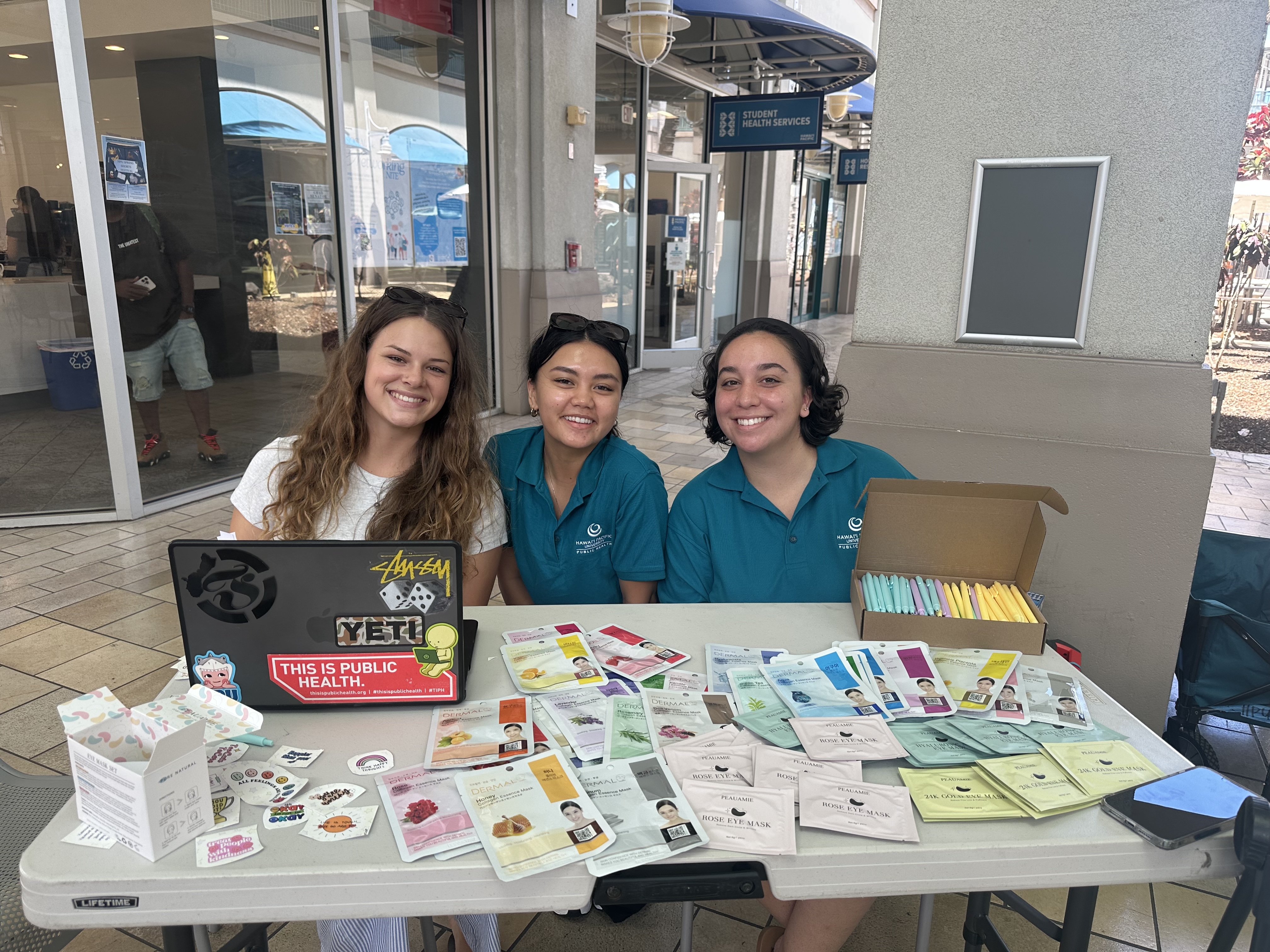
Study in one of the most culturally and geographically unique regions in the world. Our offices and classrooms at HPU's Waterfront Plaza Campus are located at the heart of downtown Honolulu. It is surrounded by offices such as the Hawai‘i State Capitol, Hawai‘i Department of Health, Hawai‘i Department of Human Services, and Centers for Disease Control & Prevention. Students also work as volunteers, interns, or employees at non-profit health organizations, research institutions, hospitals, schools, and community centers.
Students benefit from opportunities to connect classroom learning with real-world public health issues, gaining valuable insight into community health, health equity, and population health within Hawaiʻi and the broader Asia-Pacific region.
Learn from AWARD-WINNING & INTERNATIONALLY-RENOWNED FACULTY
Learn from accomplished faculty recognized for their contributions to public health research, education, and practice. The HPU MPH faculty bring expertise in areas such as epidemiology, health promotion, community health, health equity, and population health, helping students connect public health theory with real-world application.
Through personalized mentorship and collaborative learning opportunities, students gain insight from faculty whose work has influenced public health practice locally, nationally, and internationally. Visit this link to view our faculty roster.
Complete your Degree Your Way
Accelerated Program
HPU’s MPH is a flexible and accelerated 12 to 16-month program that can be completed either:
-
Fully Online (without in-person class meetings)
-
Hybrid (requires 1 in-person class meeting per 8-week term; ideal for students with face-to-face requirements such as those using military/veterans benefits).
Executive Option
HPU has an Executive Option for the MPH for students with at least 2 years of public health work experience.
Please contact the MPH Chair/Advisor for further details.
Courses & Curriculum Tailored To Career Pathways
HPU's Master of Public Health curriculum combines foundational public health knowledge with practical skills that prepare students to address complex health challenges in diverse communities. Every 8-week term, students complete only 2 to 3 courses, moving through HPU's MPH curriculum of 10 public health core courses plus 2 elective courses (42 credits total). The program culminates in 16 weeks (240 hours) of field training, mentored by public health professionals in work settings and locations matched to each student's interests and career goals. To help reduce tuition costs, HPU offers various scholarships, grants, and paid graduate assistant positions.
core competencies
- Epidemiology and population health
- Health promotion and disease prevention
- Public health leadership
- Community and global health
- Public health research and evaluation
- Health equity and social determinants of health
- Program planning and implementation
- Public health communication and advocacy
Master of Public Health (MPH)
Total Credits Required: 42 Credits
Below is a sample 12-month plan for full-time MPH students who begin during the Fall term (August). Students who begin during the Spring term (January) will follow a 16-month plan. Part-time studies are also available.
Conditional Pre-requisites
- MATH 1123 Statistics (required for students who lack previous education or experience in undergraduate-level statistics)
- PH 6100 Foundations of Public Health (required for students who lack previous education or experience in undergraduate-level public health)
Program Requirements
Fall Semester
|
1st 8-Week
|
2nd 8-week
|
Spring Semester
|
1st 8-Week
|
2nd 8-week
|
Summer Semester
|
1st 8-Week
|
2nd 8-week
|
Elective Courses
- Students must also earn 6 credits from elective courses, which can be completed anytime during the program.
- Click here to view the list of pre-approved elective courses.
WHAT CAN YOU DO WITH A MASTER OF PUBLIC HEALTH?
Public health professionals work to improve health outcomes, prevent disease, promote wellness, and address health challenges at the community and population levels. MPH graduates apply their skills across healthcare, government, nonprofit, military, research, and community-based organizations.
Career Pathways
- Public Health Program Manager
- Community Health Director
- Health Education Specialist
- Epidemiologist
- Population Health Analyst
- Public Health Research Coordinator
- Health Policy Analyst
- Healthcare Administrator
- Global Health Program Coordinator
Industries
- Healthcare Systems
- Public Health Agencies
- Government Organizations
- Nonprofit Organizations
- Community Health Programs
- Military and Veteran Health Services
- Research Institutions
- International Health Organizations
"From the day I met our Associate Dean, Dr. Smitten, her guidance and care convinced me that this investment in my education was going to be well worth the experience."
Read Full Story
Frequently Asked Questions
Q: What can I do with a Master of Public Health (MPH)?
A: A Master of Public Health prepares professionals to improve the health of individuals and communities through disease prevention, health promotion, public health leadership, and evidence-based decision-making. Graduates pursue careers across healthcare systems, public health agencies, nonprofit organizations, government agencies, research institutions, and community health programs.
Q: Is the MPH only for healthcare professionals?
A: No. HPU's MPH is designed for students from diverse academic and professional backgrounds, including healthcare, education, government, military service, nonprofit organizations, social services, business, and community organizations. Public health benefits from multidisciplinary perspectives and experiences.
Q: What careers can an MPH support?
A: MPH graduates may pursue careers as Public Health Program Managers, Community Health Directors, Epidemiologists, Health Educators, Population Health Specialists, Healthcare Administrators, Health Policy Analysts, and Public Health Research Coordinators. Public health professionals work across healthcare, government, nonprofit, military, and community-based organizations.
Q: Can I complete the MPH while working full-time?
A: Yes. HPU's MPH offers flexible learning options designed to help students balance graduate education with professional and personal responsibilities. Many students successfully complete the program while continuing to work full-time.
Q: Do I need a science or public health background to succeed?
A: No. The MPH is designed for students from diverse academic and professional backgrounds. The curriculum develops foundational public health knowledge while helping students build practical skills that can be applied in a variety of professional settings.
Q: What skills will I develop in the MPH program?
A: Students develop skills in epidemiology, health promotion, disease prevention, public health leadership, program planning, community engagement, health communication, and evidence-based decision-making. These skills help graduates address complex health challenges and improve population health outcomes.
Q: How is public health different from healthcare administration?
A: Public health focuses on improving the health of populations and communities through prevention, education, policy, and health promotion. Healthcare administration focuses on managing healthcare organizations, operations, and services. While both contribute to health outcomes, they address different aspects of the health system.
Q: Is HPU's Master of Public Health accredited?
A: Yes. HPU's Master of Public Health is accredited by the Council on Education for Public Health (CEPH), the recognized accrediting body for schools and programs of public health. Following a self-study and site visit during the 2024-2025 academic year, CEPH placed our Public Health programs under probationary accreditation through July 1, 2027. The programs remain CEPH accredited during this period. HPU is addressing the Council's concerns and will undergo another review in Spring 2027. Students with questions about accreditation and their program of study are encouraged to contact the Department of Public Health directly. Accreditations page: https://www.hpu.edu/about-us/information/accreditations.html
Q: What makes HPU's MPH different from other public health programs?
A: HPU's MPH combines flexible learning options, applied public health practice, small class sizes, and faculty expertise with a unique focus on Hawaiʻi and the Asia-Pacific region. Students gain practical skills that prepare them to address public health challenges locally, nationally, and globally.
Q: Can an MPH help me make a difference in my community?
A: Yes. Public health professionals work to improve health outcomes, reduce health disparities, prevent disease, and strengthen communities. The MPH prepares graduates to develop programs, influence policy, and implement initiatives that create meaningful and measurable community impact.