

Master of Science in Marine Science
LEARN AND RESEARCH WITH THE BEST MARINE SCIENCE PROFESSIONALS IN THE MIDDLE OF THE PACIFIC
What better place to learn about advanced marine systems and coastal resource management than on an island in the middle of the Pacific Ocean?
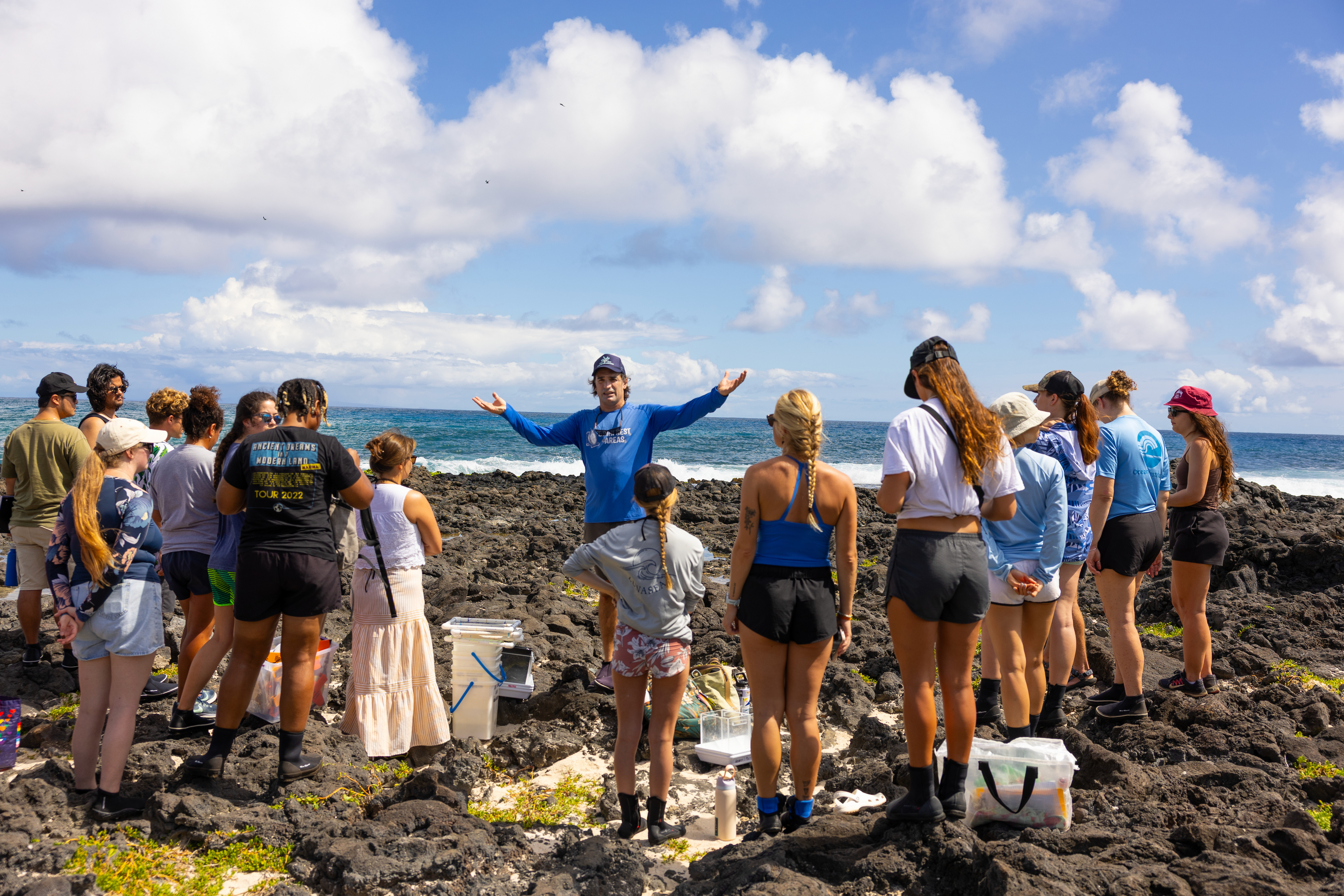
The Master of Science in Marine Science (MSMS) at Hawaiʻi Pacific University combines interdisciplinary coursework with hands-on field and laboratory research at the Waimanalo-Makapuʻu Campus, home to HPU's marine science research center and the Oceanic Institute, a world-renowned aquaculture research and development facility.
Students can tailor their graduate experience by choosing either the Applied Track (MSMS-A) or Thesis Track (MSMS-T). Whether preparing for a professional career or doctoral study, students develop a broad understanding of marine systems while working alongside faculty in one of the world's most diverse marine environments.
at a glance
 Class Settings
- On Campus

Start Dates
- Fall Entry: August

COURSE INFORMATION
- Applied Track: 39 Credits / Complete in 21 Months Full Time
- Thesis Track: 36 Credits / Complete in 21 Months Full Time

TUITION
All costs can be found at hpu.edu/costs.

ADMISSION REQUIREMENTS
-
Online application with $55 fee (waived when attending an event or 1:1 consultation)
- Official transcript/s (bachelor’s degree or higher)
- Resume
- Online essay questions
- Two (2) letters of recommendation
- Additional requirements below
- English proficiency required for international students
Request Info
Explore The Last Frontier on Earth
Complete in 21 months as a full-time Student
Assistantships and SCholarships Available
Dual Enrollment Opportunities for HPU Seniors
Learn By Doing with Skills-Based Learning
Complete your MSMS directly across the street from the ocean, steps away from the natural environment in Makapuʻu on the windward coast of O‘ahu. The Makapuʻu campus includes marine research and biotechnology laboratories, aquaculture and animal holding facilities, along with a teaching laboratory and classrooms.
COMPLETE YOUR DEGREE YOUR WAY
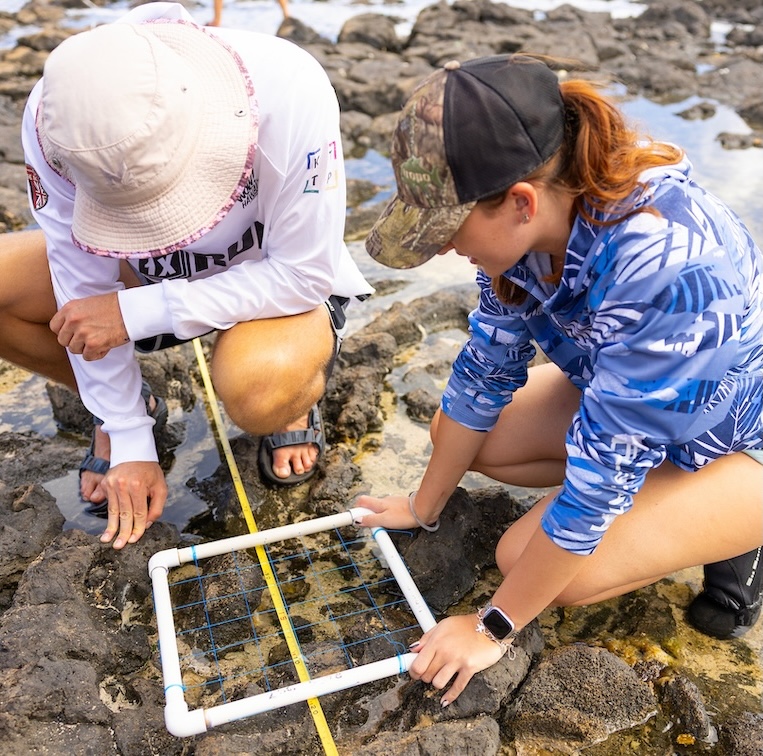
Professional Track
IDEAL FOR
Students interested in research, scientific discovery, and preparing for doctoral study or academic careers.
PROGRAM FOCUS
Develop advanced research skills through an original thesis conducted under the mentorship of a faculty researcher.
CULMINATING EXPERIENCE
Original research thesis with written and oral defense.
FACULTY MENTORSHIP
Work one-on-one with a faculty advisor throughout your research project.
LENGTH OF PROGRAM
21 months / 39 credits
ENTRY TERM
Fall
PROGRAM DELIVERY
On-campus
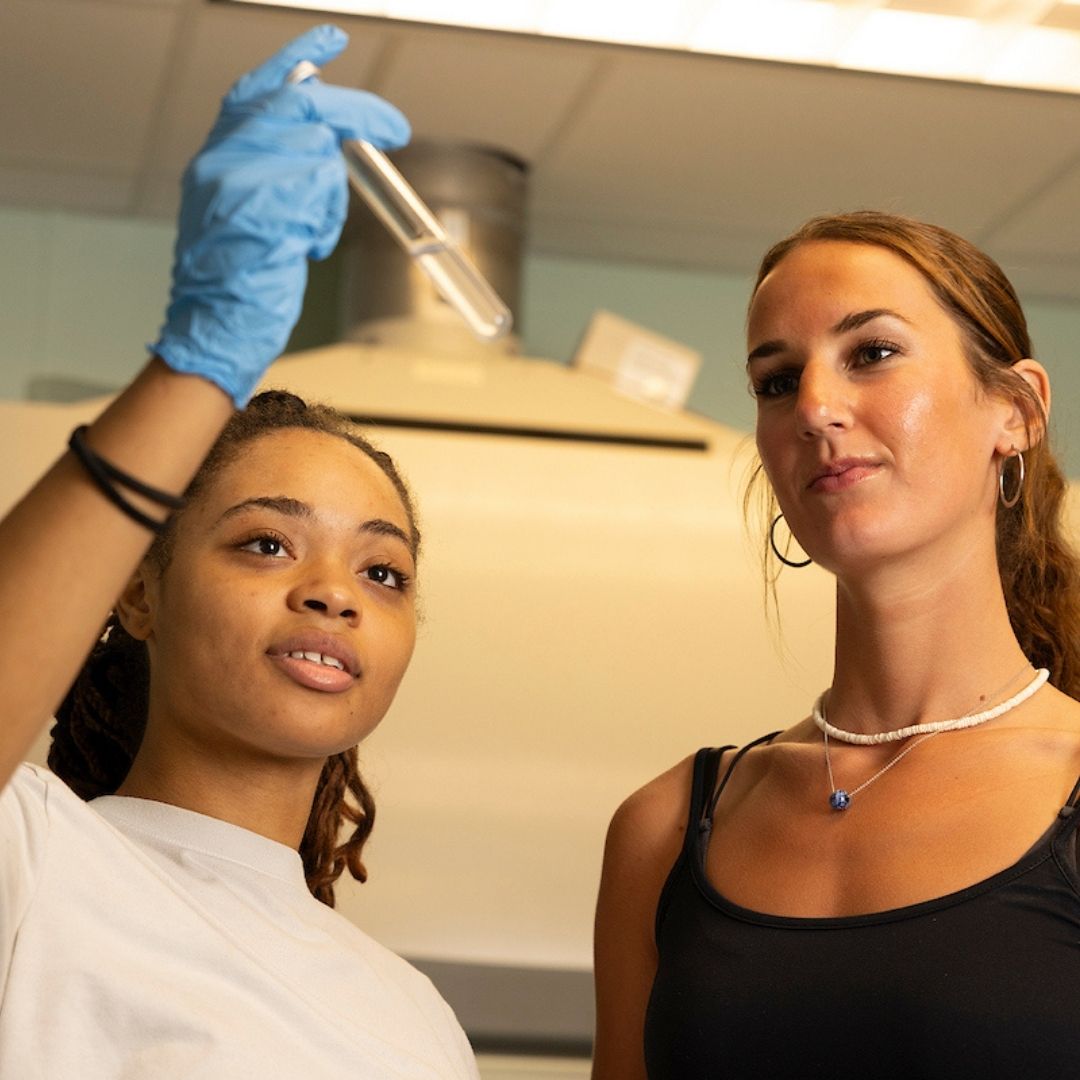
Research Track
IDEAL FOR
Students seeking professional careers in marine science, conservation, environmental management, and resource management.
PROGRAM FOCUS
Develop practical, analytical, and technical skills through applied coursework and a hands-on professional practicum.
CULMINATING EXPERIENCE
Professional practicum working alongside marine resource management professionals.
INDUSTRY EXPERIENCE
Gain real-world experience through applied projects and professional partnerships.
LENGTH OF PROGRAM
24-36 months / 36 credits
ENTRY TERM
Fall
PROGRAM DELIVERY
On-campus
Professor of Marine Science & Chair, Department of Marine Sciences
Research Areas: Fish Physiology • Coral Reef Ecology • Marine Conservation • Ocean Warming • Environmental Change
Dr. Keith Korsmeyer's research explores how marine fishes respond to changing environmental conditions, with a focus on fish physiology, swimming performance, thermal biology, and coral reef ecosystems. His work helps advance scientific understanding of how climate change and environmental stressors influence marine biodiversity and the resilience of tropical reef communities.
Contact
Associate Professor of Marine Science
Research Areas: Coral Reef Ecology • Coastal Resource Management • Watershed–Reef Connectivity • Marine Conservation • Tropical Ecosystems
Dr. Carmella Vizza's research focuses on the relationships between terrestrial and marine ecosystems, examining how watershed processes, land use, and environmental change influence coral reef health and coastal resilience. Her work integrates ecology, conservation science, and resource management to support sustainable stewardship of Hawaiʻi's marine environments.
Contact
Associate Professor of Marine Science
Research Areas: Biological Oceanography • Marine Ecology • Ocean Productivity • Marine Food Webs • Climate-Ocean Interactions
Dr. David Field's research explores the biological and physical processes that shape marine ecosystems, with an emphasis on ocean productivity, marine food webs, and the interactions between ocean conditions and marine life. His interdisciplinary approach integrates oceanography, ecology, and environmental science to better understand the dynamics of marine ecosystems.
Contact
Curriculum and Courses Tailored To You
The MSMS degree program fosters a broad understanding of marine systems through an interdisciplinary program of study. The MSMS program has two tracks:
Thesis Track is a research-based program that emphasizes a hands-on approach to learning through the completion of an original thesis project under the direct mentorship of an experienced marine science researcher.
Applied Track provides students with a broad-based, in-depth knowledge of the ocean's physical, geological, chemical, and ecological processes coupled with the technical skills necessary to contribute to exploring the marine environment and the management of its living resources.
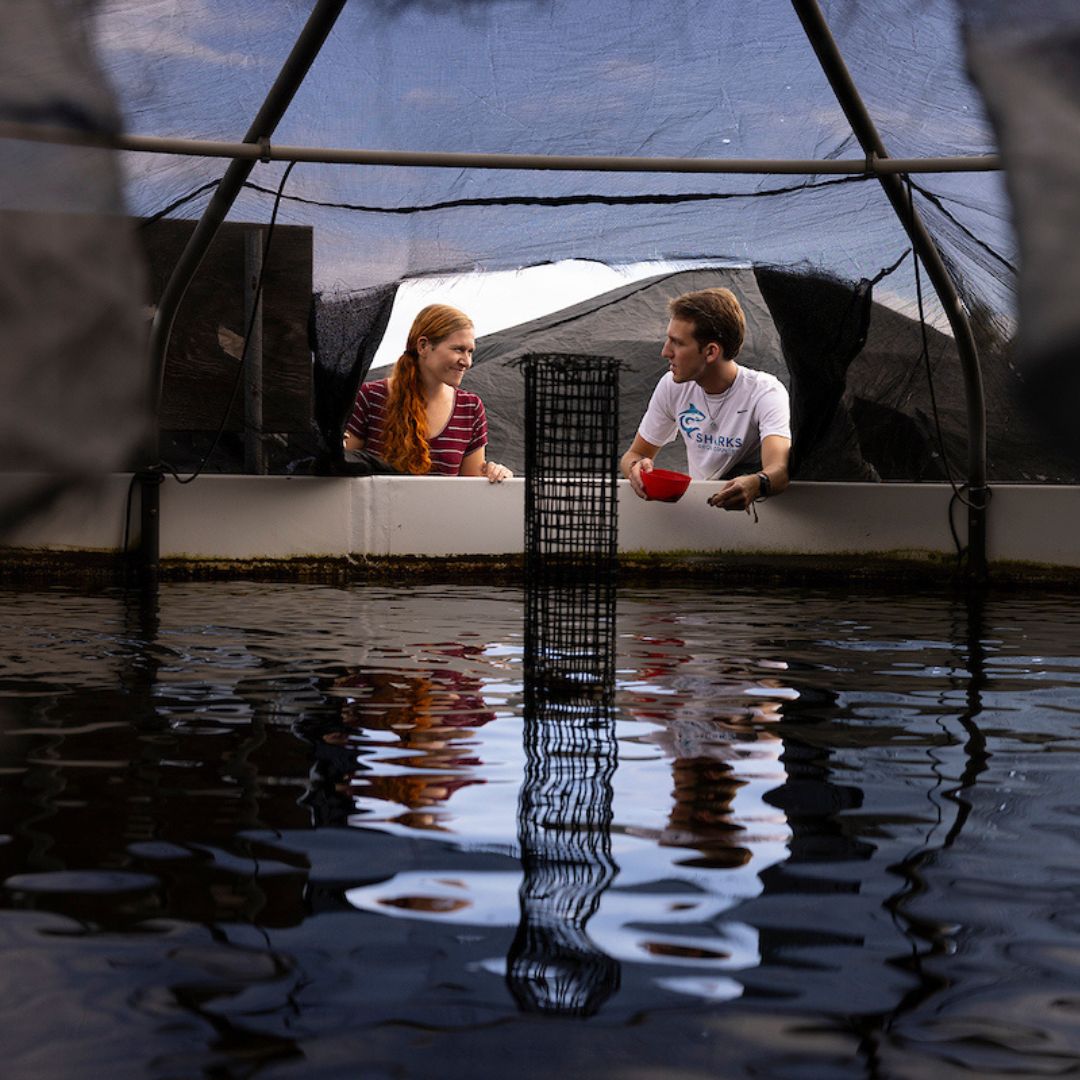
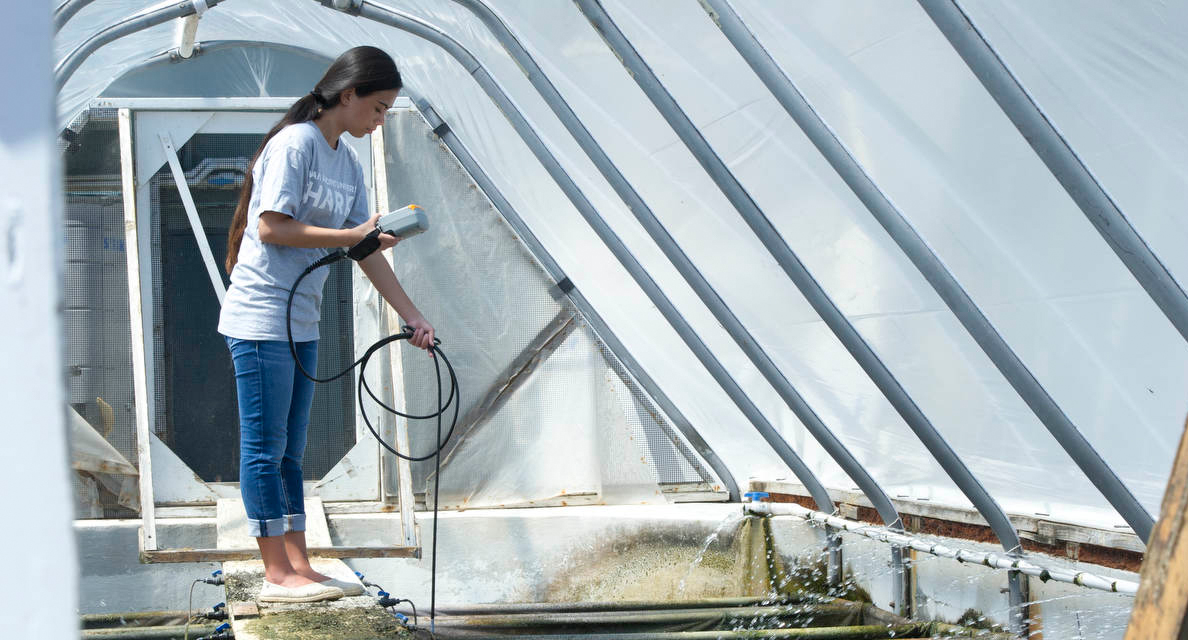
HPU's Shared Instrumentation Facility (SIF) provides students and faculty with access to advanced scientific equipment that supports graduate research, laboratory instruction, and field-based investigations. Supported by funding from organizations including the National Science Foundation and the National Institutes of Health, these research-grade facilities expose students to the technologies and techniques used by today's marine and environmental scientists. Comprehensive training and technical support help ensure students gain practical experience using modern scientific instrumentation throughout their graduate education.
For more information, please visit Scientific Instrumentation Facilities.
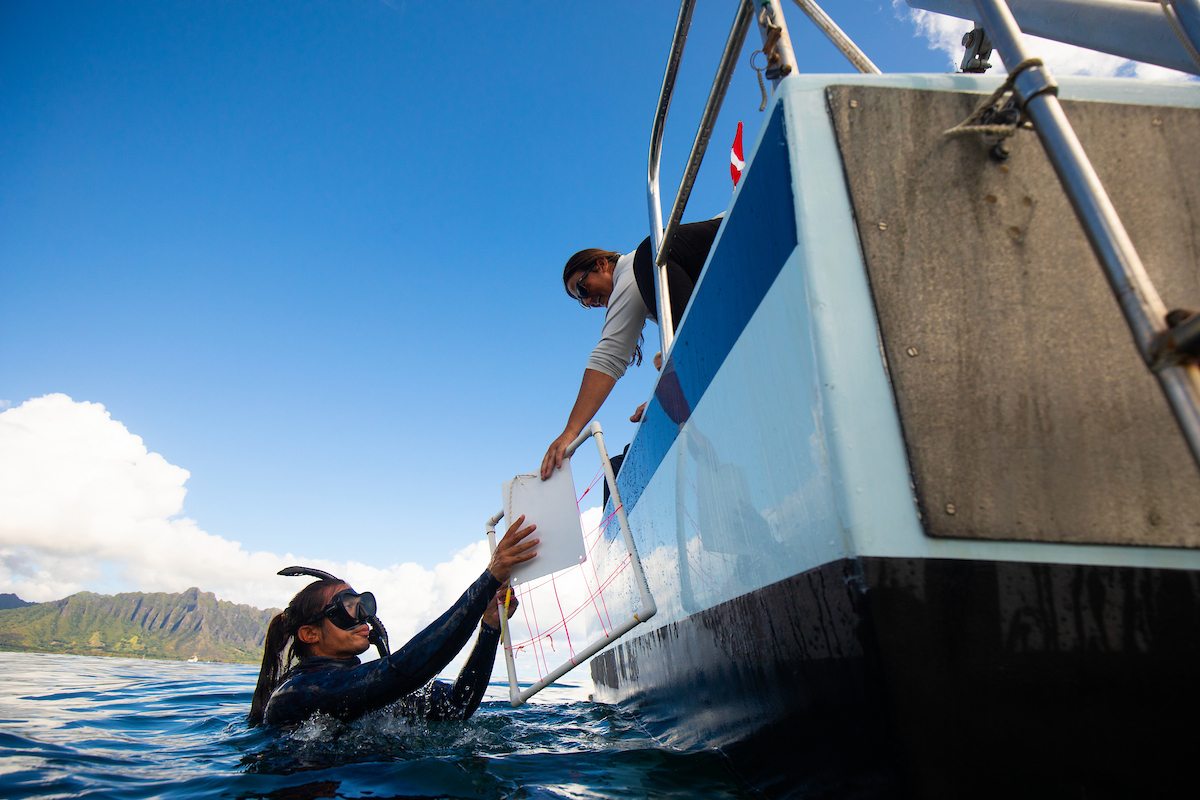
HPU's research vessel, Kaholo, serves as a floating laboratory where students gain hands-on experience conducting marine and oceanographic research in Hawaiʻi's coastal and offshore waters. Equipped with advanced sampling equipment and oceanographic instrumentation, Kaholo supports field-based learning in marine ecology, biological and physical oceanography, water quality analysis, and environmental monitoring. Graduate students work alongside faculty to collect, analyze, and interpret real-world scientific data while developing practical research skills at sea.
For more information about careers in marine science or our vessel the Kaholo, please visit Resources for Marine Science.
HPU Support
HPU offers merit-based Graduate Assistantships (GAs) that provide a 50% or 25% tuition discount for four consecutive semesters.
External Funding Opportunities
- NSF Graduate Research Fellowship
- EPA Science to Achieve Results (STAR) graduate fellowship
- Dr. Nancy Foster Scholarship
- Steven Berkeley Marine Conservation Fellowship
- North Pacific Research Board Graduate Student Research Award
- American Meteorological Society Graduate Fellowship
- Smithsonian Tropical Research Institute Fellowships
- Society of Exploration Geophysicists Scholarship
- Schlanger Ocean Drilling Fellowship
- The Geological Society of America graduate student research grants
- International Women's Fishing Association Scholarship
- International Society for Reef Studies Graduate Fellowship
- Fulbright Scholar Program
- DoD Science, Mathematics And Research for Transformation (SMART) Scholarship for Service Program
- Must be a U.S. citizen and accept DOD employment post-graduation
- Charles H. Bussman Graduate Scholarship
- Open to MTS members who are college graduate students currently enrolled full time in a marine-related field
- The MTS Student Scholarship
- Open to MTS members who are college graduate students currently enrolled full time in a marine-related field
- John C. Bajus Scholarship
- Open to MTS members who are college undergraduates and graduate students currently enrolled full time in a marine-related field who have shown a commitment to community service and/or volunteer activities
- ROV Scholarship
- Open to MTS student members interested in remotely operated vehicles (ROVs) or underwater work that furthers the use of ROVs
- Dieter Family Scholarship
- Open to MTS members who are college graduate students currently enrolled full time in a marine-related field
Minority Scholarships / Fellowships
- Sigma Delta Epsilon/Graduate Women in Science National Fellowship
- For women who hold a degree and are performing research
- American Association of University Women Fellowships
- For women
- Association for Women Geoscientists awards and scholarships
- Must be a member of AWG
- Zenefits Advancing Women in STEM Scholarship
- For women in STEM with demonstrated financial need
- American Indian Science and Engineering Society - several STEM scholarships
- For women in STEM with demonstrated financial need
- American Indian Graduate Center graduate fellowships
- Must be American Indian, Native Alaskan, or Native Hawaiian
- Hispanic Scholarship Fund
- Must be of Hispanic heritage
- Paul & Daisy Soros Fellowships for New Americans
- Must be an immigrant or child of immigrant parents
- National Association for Black Geoscientists
- Must be a U.S. citizen and minority
- Scholarship Opportunities For Native American Students
- Must be Native American
Internship / Other
- East Asia and Pacific Summer Institutes for U.S. Graduate Students
- Provides funding for a summer internship in East Asia/Pacific
- NOAA Coral Reef Management Fellowship
- NOAA Sea Grant John A. Knauss Marine Policy Fellowship
- Most appropriate for students defending their thesis soon - fellowship requires moving to the DC area
- UH Sea Grant Internship and Fellowship Opportunities
- Open to students enrolled in a graduate program at any US accredited university
Join HPU's Strong Alumni Network
“To conduct research at this amazing place in Hawaiʻi, sharing the experience with my students, is what brings me the greatest happiness and reflection in all that I have accomplished so far in my career, and at HPU.”
Read Full Story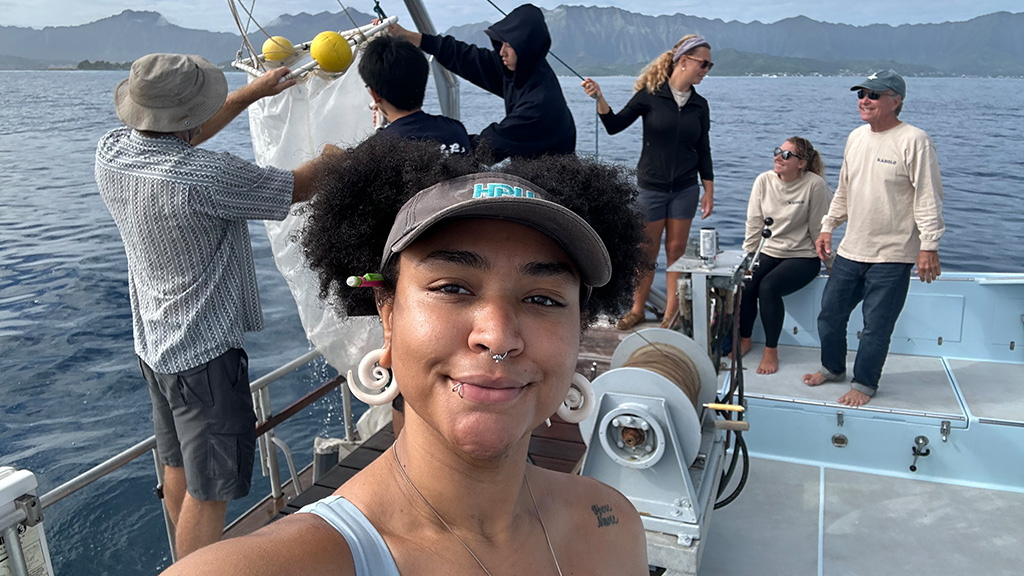
HERE ARE JUST SOME OF THE PATHS OUR STUDENTS HAVE TAKEN AFTER GRADUATING FROM OUR MASTER OF SCIENCE IN MARINE SCIENCE PROGRAM:
- NOAA Marine Debris Technician, Northwestern Hawaiian Islands
- Operations Manager, NOAA Atlantic fleet
- Habitat Restoration Coordinator for the non-profit conservation organization Malama Maunalua
- Pacific Islands Marine Debris Assistant Regional Coordinator for NOAA, Papahanaumokuakea National Marine Monument
- Lecturer, California State University - Monterey Bay
- Endangered Species Officer, Marshall Islands Marine Resources Advisory
- STEAM Outreach Specialist, Bishop Museum, Honolulu, HI
- Aquaculture Research Associates, Oceanic Institute, Waimanalo, HI
- Wildlife Management Intern, U.S. Fish & Wildlife Service
- Science Curriculum Specialist, Mālama Honua Public Charter School, Waimanalo, HI
- NOAA Field Observer, Papahanaumakuakea Marine National Monument, Midway Island
- Biological Technicians, Alaska Maritime National Wildlife Refuge
- Fishery Policy Analyst, International Programs Staff Office, NOAA Pacific Islands Regional Office
- Marine Biologist / NOAA Unit Dive Supervisor, Ecosystems and Oceanography Division, NOAA Pacific Islands Fisheries Science Center
- Programs and Operations Coordinator, Hawaiian Islands Humpback Whale National Marine Sanctuary, Maui, HI
- Field Research Supervisor, Joint Institute for Marine and Atmospheric Research, University of Hawaiʻi-Manoa/NOAA Pacific Islands Fisheries Science Center
- Loko I'a Coordinator for Kua'aina Ulu 'Auamo - a community-based nonprofit for environmental conservation in Hawaiʻi
- NOAA Sea Grant Knauss Marine Policy Fellow, Washington, DC
- Fishery Analyst, Western Pacific Fishery Management Council, Honolulu, HI
- Marine Turtle Research Associate, Marine Turtle Research Program, NOAA Pacific Islands Fisheries Science Center
- Project Researcher, Sustainable Fisheries Group at the School of Environmental Science and Management, University of California - Santa Barbara
- High School Science Teachers, various locations
- Doctoral Candidates in various science programs, U.S. & abroad
Application Requirements
- Apply online hpu.edu/apply ($55 app fee)
- Official transcript/s
- Online essay questions
- Resume
- Two (2) letters of recommendation
A baccalaureate degree in the Natural Sciences is required for entry into the MSMS program. Certain course prerequisites may be required before enrolling in graduate MSMS courses, depending on the student’s academic preparation and research interests.
For students in the thesis track, the graduate thesis committee will determine whether any deficiencies exist and how these deficiencies will be addressed. Additionally, being paired with a faculty mentor is necessary for acceptance into the MSMS-T track.
PRiority Application Date: January 15
Frequently Asked Questions
Q: Who is eligible for HPU’s MSMS program?
A: Students graduating with a Bachelor’s degree in the Natural Sciences with a cumulative GPA of 3.0 or higher may apply to the MSMS program at HPU. International students may be required to provide TOEFL scores. Please visit International Requirements for more information about eligibility if applying as an international student.
Q: Besides applying, what else do I need to do to get into your program?
A: To be accepted to the MSMS-T (thesis) track, an MSMS faculty advisor must agree to serve as your mentor throughout the research and thesis process. For this reason, we encourage students to begin making contact as soon as possible with faculty whose research is of interest. The onus is on the applicant to initiate contact with potential mentors. Acceptance to the MSMS-A (applied) non-thesis track does not require the commitment of a faculty advisor; the MSMS Program Director and MSMS Program Administrator work together as MSMS-A advisors.
Q: How important is my GRE score?
A: THE GRE IS OPTIONAL. Rather than evaluating an applicant on the basis of GRE scores alone, we focus on how students performed relative to the rest of their test group. Our percentile breakdown is as follows: 75th percentile = Desirable, 50th percentile = Qualified, 40th percentile = Satisfactory. Applicants with scores lower than the 40th percentile will only be accepted if the student has very strong transcripts or strong HPU faculty support. Students with scores below the 40th percentile may be required to take courses in the area(s) of weakness or re-challenge the exam.
Q: FOR INTERNATIONAL STUDENTS REQUIRED TO TAKE THE TOEFL EXAM, WHAT ARE THE MINIMUM SCORES NEEDED TO BE ELIGIBLE TO APPLY?
A: TOEFL (IBT) overall score of 80 with a writing score of 25 or IELTS overall score of 6.0 with a writing score of 6.5.
Q: Is there an interview?
A: HPU’s Graduate Admissions website shows that an interview is required as part of the selection process, and interviews are required for acceptance to the MSMS-
Q: Is funding available?
A: The MSMS program does not offer scholarships, but MSMS-T accepted applicants are automatically considered for a merit-based Graduate Assistantship (GA). MSMS-A applicants are automatically placed on a waitlist for the GA, and may receive this award if funding is available. Beginning Fall 2018, we are able to offer a limited number of Graduate Assistantships which include either a $6250 OR $3125 tuition waiver for four consecutive semesters (not including summer terms) in return for 19 HRS/WK OR 10 HRS/WK (respectively) of service to the Department of Natural Sciences. Students do not need to apply for the GA; all accepted applicants are evaluated for this award
Some faculty may have grant funds available to help support their MSMS-T students; you will need to ask prospective faculty advisors about potential support for their specific research programs.
For a list of external scholarships, internships, and fellowships for graduate students in the marine sciences, see the Funding Opportunities section below. Students may also apply for loans offered through the Financial Aid Office at HPU. Visit the HPU-FAO website directly for more information.
For more information, or for answers to questions not listed above, please contact the MSMS Program Administrator at msms@hpu.edu
Q: What can I do with a Master of Science in Marine Science (MSMS)?
A: The MSMS prepares graduates for careers in marine conservation, environmental consulting, fisheries management, ocean science, research organizations, government agencies, nonprofit organizations, and natural resource management. The Thesis Track also provides strong preparation for students pursuing doctoral study.
Q: What is the difference between the Thesis Track (MSMS-T) and the Applied Track (MSMS-A)?
A: The Thesis Track is designed for students interested in conducting original research and preparing for doctoral study or research-focused careers. The Applied Track emphasizes practical, hands-on learning through a professional practicum and is ideal for students pursuing careers in marine science, conservation, environmental management, and resource management.
Q: Why should I study marine science at HPU?
A: Located in the heart of the Pacific, HPU offers direct access to coral reefs, tropical marine ecosystems, and diverse coastal environments that serve as an extension of the classroom. Students benefit from faculty mentorship, field-based learning, modern research facilities, and opportunities to conduct meaningful scientific research in Hawaiʻi.
Q: What research opportunities are available to graduate students?
A: Graduate students participate in faculty-led research, independent investigations, laboratory studies, and field research addressing topics such as coral reef ecology, fisheries science, biological oceanography, marine conservation, aquaculture, and environmental monitoring. Research opportunities vary by faculty expertise and student interests.
Q: Will I have opportunities to conduct field research?
A: Yes. Students gain hands-on experience through fieldwork in Hawaiʻi's coastal and offshore environments using HPU's research vessel, Kaholo, advanced scientific instrumentation, and marine research facilities. These experiences allow students to collect, analyze, and interpret real-world scientific data.
Q: What laboratories and research facilities are available?
A: Students have access to HPU's Shared Instrumentation Facility, instructional and research laboratories, specialized scientific equipment, and the Oceanic Institute. These resources support graduate-level research and provide experience with the technologies used by today's marine scientists.
Q: Will I work closely with faculty?
A: Yes. Small class sizes and individualized mentorship are hallmarks of the MSMS program. Students collaborate closely with faculty on research projects, receive personalized academic guidance, and develop the scientific and professional skills needed for careers or doctoral study.
Q: Can the MSMS prepare me for a PhD program?
A: Yes. The Thesis Track is specifically designed to provide advanced research experience, scientific writing, and faculty mentorship that strengthen preparation for competitive doctoral programs. Students interested in graduate research careers are encouraged to explore the Thesis Track.
Q: What makes Hawaiʻi an ideal place to study marine science?
A: Hawaiʻi's diverse marine ecosystems provide exceptional opportunities to study coral reefs, coastal environments, fisheries, and tropical ocean systems. As a living laboratory, the islands allow students to apply classroom concepts through field research while addressing real-world environmental challenges unique to the Pacific region.
Q: Is the MSMS program right for me?
A: The program is well suited for students with backgrounds in marine science, biology, environmental science, oceanography, or related disciplines who are passionate about marine research, conservation, and resource management. Whether your goal is a professional career or doctoral study, the MSMS offers flexible pathways to support your academic and career aspirations.