

-
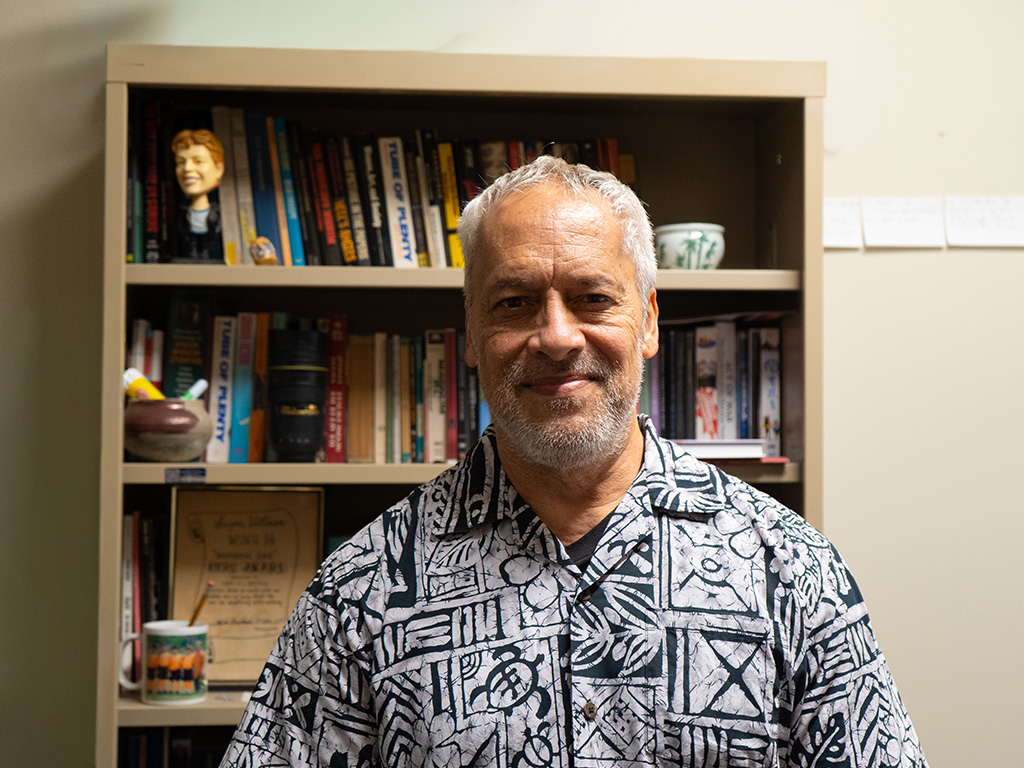
Pete Britos.
-
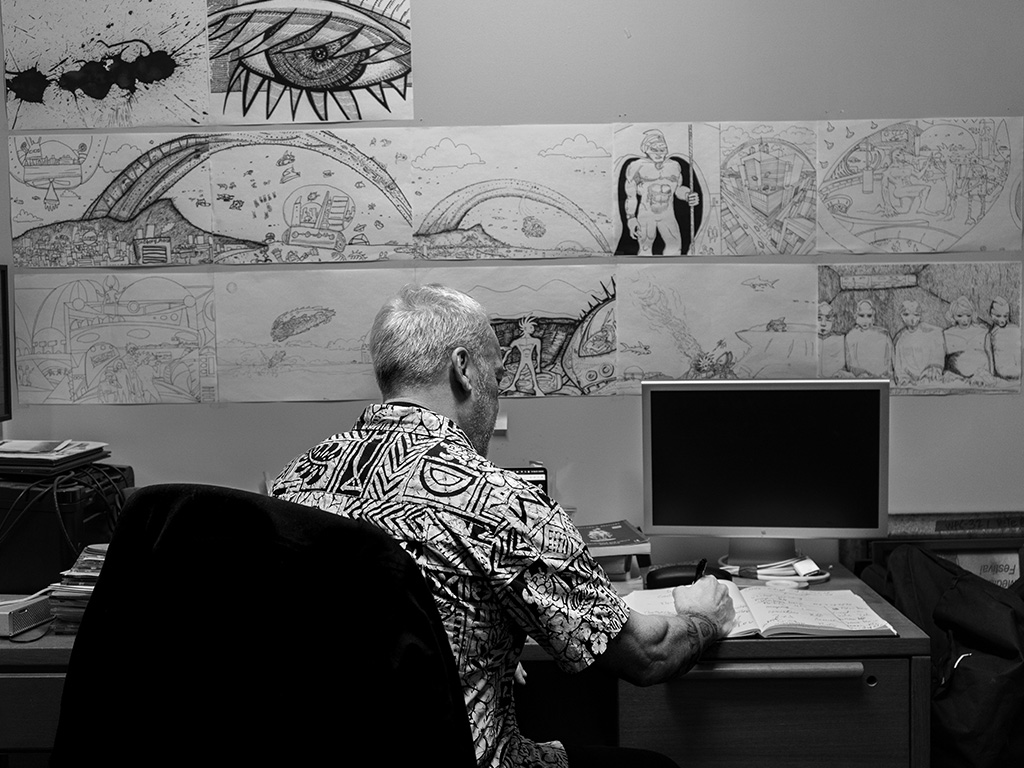
Pete Britos is the author of a soaring sci-fi universe, a grand epic trilogy that he is currently polishing.
It is a rare and profound privilege to sit across from a polymath: a person whose life experiences are so vast and whose creative output is so deeply rooted in the soil of history that every sentence feels like a discovery. HPU Professor and Program Chair for Cinematic Multimedia Arts Pete Britos, Ph.D., is exactly that. To interview him is to be invited into a living archive of global migration, colonial complexity, and the relentless, often grueling, pursuit of artistic truth. Listening to him, I felt not just like a journalist, but like a student of the human condition, witnessing how a single life can synthesize the rhythms of the Pacific and the Caribbean into a coherent, powerful voice.
Britos’s lineage is a stunning map of the human experience. His roots are not simply diverse; they form a vibrant and sometimes painful tapestry that challenges our modern understanding of identity. His mother, the first of the modern "Caribbean Queens" crowned Miss U.S. Virgin Islands in 1956, hailed from St. Croix, carrying a lineage that blended Danish, German, Scottish, Creole, and Black ancestry, including a great-great grandmother known as "Slave Catherine." His father’s side brought the story to the Philippines and Hawaii, a mix of Chinese, Filipino, Spanish, and Portuguese heritage.
During our conversation, Britos spoke with moving candor about the "complex histories" of his ancestors including the 1820s decree in the Philippines, which forced indigenous people to adopt Spanish surnames like Brito, effectively masking their ancestry under a colonial label. He uses this knowledge not to dwell in the past, but to understand the bone-deep realities of colonization and human connection that shape the world today.
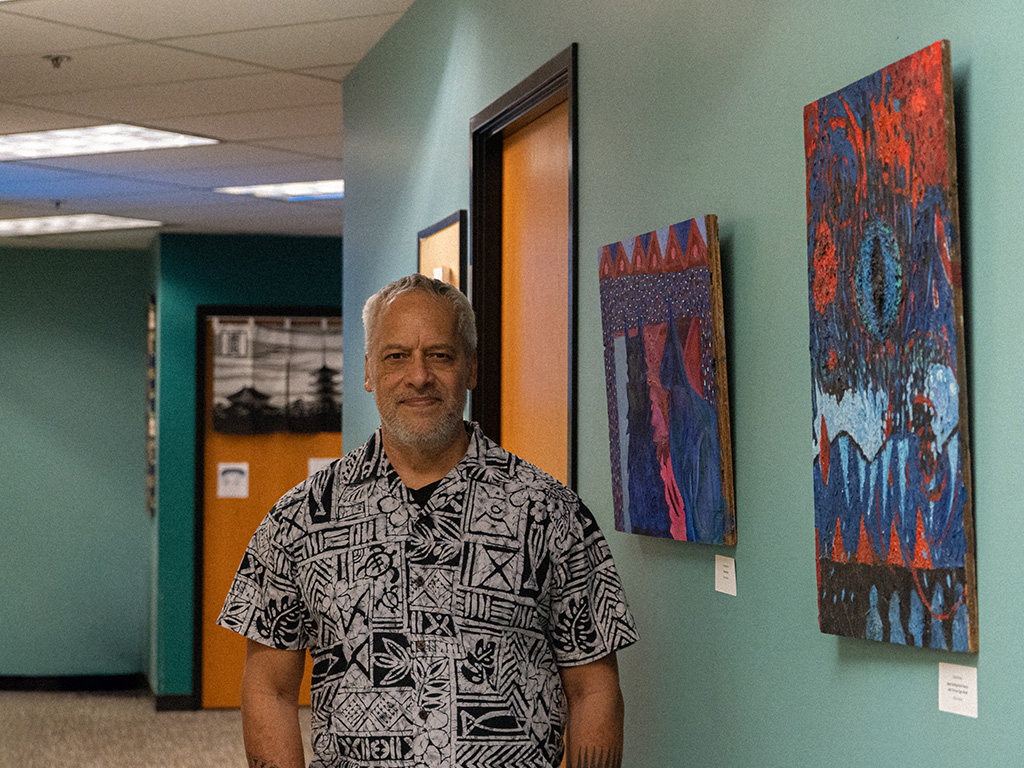
Professor Pete Britos teaches global cinema, global media studies, creative narrative production, global documentary, feature film screenwriting, cinematography, and photography at HPU.
Long before he was a doctor of film and literature, Britos was the eldest son in a family band. Under the tutelage of his father, a scientist and master musician, the Britos children performed across Japan, Panama, and the U.S. This was not merely a musical upbringing; it was a foundational education in structural empathy. Singing in stanzas and multiple dialects from the age of three ingrained in him a rhythmic "lyricism" that defines his prose today. He describes "riffing" as a life skill, teaching him how to harmonize, collaborate, and produce logistics he would eventually use to produce film, television, and radio. He understood, even as a child, that in art, just as in music, you must be all there.
His childhood was nomadic, taking him from the jungles of Panama to the Mediterranean coast of Turkey and the heart of Germany. This upbringing gave him a perspective few possess: he grew up as part of the "colonizing force," living within communities while his father worked for the U.S. military. This allowed him to observe the human processes behind political upheaval without falling into the trap of simple demonization. He saw that many of the people participating in these structures were not "bad guys," but individuals trying to survive and raise their families. This perspective is vital to his art, allowing him to render historical and political conflicts with a nuanced, non-binary lens.
Perhaps the most harrowing and inspiring chapter of his story involves a freak accident that severed the ulnar nerve in his dominant hand (the "funny bone" nerve) essential for grasping and dexterity. This injury ended a promising career in professional sports and, for a time, seemed to paralyze his ability to create art.
Instead of succumbing to despair, he performed an act of incredible defiance: he relearned to draw with his left hand and shifted his academic focus to English. He realized that if he wanted to fight for his life, he had to master the precision of language. Much like Gabriel García Márquez’s transition from journalism to magical realism, Britos used the intense, descriptive writing required to document his trauma as the crucible in which his literary voice was forged.
Today, Britos is the architect of a soaring sci-fi universe, The Valley of Spiraling Winds. His work occupies a unique, profound space in speculative fiction, where the high-tech future meets the deep, ancestral past. In his world, characters use "mnemonic machines" devices designed to dive into the deep, biological memory of their ancestors to solve mysteries that span centuries.
His vision includes a grand, epic trilogy that he is currently polishing. While Valley of Spiraling Winds uses the future to investigate 19th and 20th-century history, Spiral Jungle takes the reader into a far-future epic, and his third installment returns to the contemporary, grounding his high concept ideas in traditional literature.
Britos is a man who has "walked the walk," from catching the bus to the set of Magnum P.I. as a young man to mastering the "acting for directors" courses at the University of Southern California, he has always been a keen observer of how systems work. It was a profound privilege to speak with a man who has navigated the fires of personal hardship and emerged with a vision of a world that is more understood, more connected, and perhaps, more healed.
Photography by Maika Noyher Astacio Ocasio.