

M.Ed. in Secondary Education
inspire the next generation of learners
Hawaiʻi Pacific University's Master of Education in Secondary Education (M.Ed.) prepares aspiring teachers for initial teacher licensure in grades 6–12 through a practice-based

curriculum that combines educational theory, content-specific pedagogy, field experiences, and clinical practice. Designed for individuals seeking careers in secondary education, the program develops knowledgeable, culturally responsive educators equipped to engage adolescent learners and inspire academic success in Hawaiʻi and beyond.
Receive a global, world-class education while being immersed in a diverse environment located in the center of the Pacific Rim. You will learn alongside peers from all 50 states and more than four dozen countries who provide unique worldviews and perspectives. Hawaiʻi’s location also presents you with the opportunity to teach in culturally diverse classrooms that are impossible to find elsewhere.
At A Glance
 Class Settings
- On Campus / Evening
- Online / Asynchronous

Start Dates
- Fall Entry: August
- Spring and Summer entry points will be considered on a case-by-case basis determined by the candidate's teaching experience.

COURSE INFORMATION
- 36 Credits
- Complete in 12 Months Full Time

TUITION
All costs can be found at hpu.edu/costs.

ADMISSION REQUIREMENTS
-
Online application with $55 fee (waived when attending an event or 1:1 consultation)
- Official transcript/s (bachelor’s degree or higher)
- Resume
- Passing Praxis exam score or 30+ credits in content area
- Interview
- Concentration requirements below
Optional:
- Personal Statement/Essay
- Letters of Recommendation
Request Info
FAQs With Dr. Mani Sehgal & Dr. Eugene Guillian
Dr. Mani Sehgal & Dr. Eugene Guillian discuss common questions about HPU's graduate-level education programs: M.Ed. in Elementary Education, M.Ed. in Secondary Education, and M.Ed. in Educational Leadership.
450 hours of clinical Practice
Complete in 12-months as a full-time student
100% virtual or seated
Learn by doing with Skills Based Learning
The M.Ed. in Secondary Education develops professional educators who are reflective practitioners dedicated to the scholarship of teaching and school renewal. The program is based on a standards-driven, field-based, and inquiry-oriented curriculum that employs cutting-edge educational technology to integrate content and pedagogy. Employing an electronic portfolio-based assessment system, university faculty and mentor teachers guide the candidate's progress in achieving professional knowledge, skills, and dispositions.
Not only does the M.Ed. in Secondary Education program take a global view, the learning environment at HPU is also multi-cultural. It is a portable degree, recognized in Hawai‘i and on the mainland. The curriculum is aligned with professional, state, and institutional standards. Located in the center of the Pacific Rim, Honolulu is a cosmopolitan city with a busy, international community. This attracts a wide-range of learners and uniquely prepares you to teach in culturally diverse classrooms.
Graduate faculty at HPU are well-respected teachers and scholars in their respective fields. Because they come to HPU from all parts of the United States, they also bring a wealth of worldly experience to campus. You will find a deep commitment to utilizing educational technology tools at HPU, including access to online periodical databases, a digital portfolio-based web page assessment system, course web-page technology, and state-of-the-art wireless services and high-tech classrooms.
Curriculum and Courses Tailored to Career Pathways
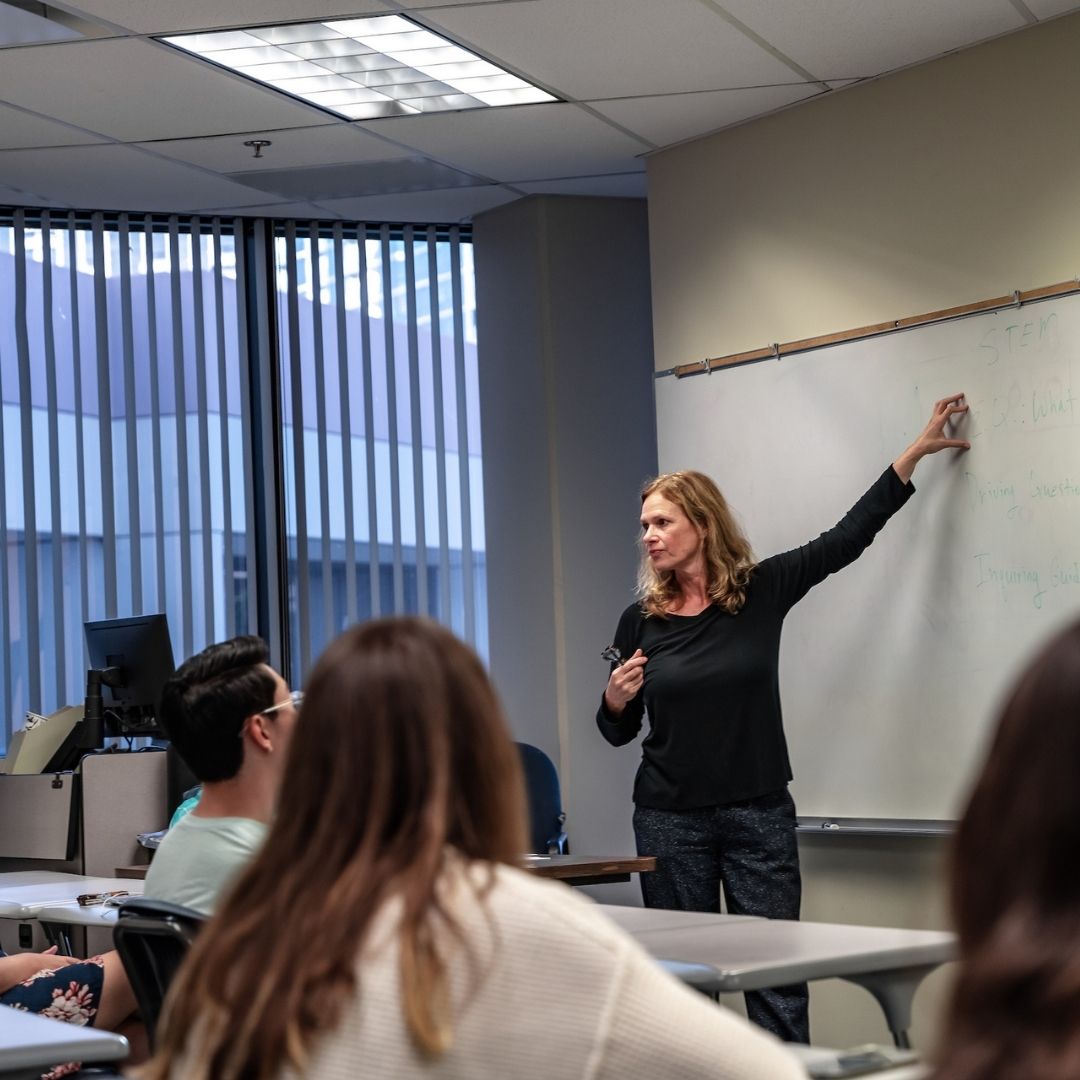
HPU's M.Ed. Program in Secondary Education program prepares candidates to become competent, caring, and professional educators through classroom discussions and clinical practice experiences. Teacher candidates learn in small classes and enjoy individual attention by university faculty and mentor teachers.
The program prepares individuals for licensure in Hawai'i in grades 6-12 in six content areas:
- English
- Mathematics
- Science
- Social Studies
- Teaching English to Speakers of Other Languages (TESOL)
- World Languages
Graduate students will complete 450 hours of clinical practice in one semester. Placement at a school is determined by various factors: educational philosophy, employment of the teacher candidate at the school, proximity of the teacher candidate’s residency to the school, convenience to the teacher candidate’s outside employment, etc. Every effort is made to make the clinical practice meaningful, relevant and challenging to our students.
Teacher candidates must complete ten core seminar courses in secondary education and content curriculum and two capstone clinical practice courses, for a total of 36 credit hours.
Full-time enrolled, Fall entry
Fall Semester (12 credits)
- ED 6000 The Professional Educator
- ED 6100 Educational Psychology
- ED 6300 Introduction to Teaching
- ED 6700 The Exceptional Learner
Spring Semester (12 credits)
- ED 64XX Secondary Content Curriculum & Instruction
- English, Math, Science, Social Studies, TESOL, or World Languages
- ED 6480 Integrated Curriculum: Literacy and Content
- ED 6521 Secondary Clinical Practice I
- ED 6522 Secondary Clinical Practice II
Summer Semester (12 credits)
1st 8-week term
- ED 6430 English Language Learner
- ED 6200 Introduction to Educational Research
2nd 8-week term
- ED 6310 Culturally Responsive Education in Hawaii
- ED 6660 Diversity and Social Change
explore HPU's Graduate Certificates
Organization Development and Leadership
The certificate program focuses on change and development at the organizational, team and individual level. Constant technological, economic, political, and social change have become the norm, and dealing with the rapid pace of change is a challenge faced by almost all professionals.
Ethics in Public Service
The Graduate Certificate in Public Service Management is for working professionals, students or other interested individuals. It provides additional knowledge, skills, and competencies necessary for subject-matter experts to be successful professional civil servants in managing and supervising public programs in state and local offices and agencies.
Public Service Management
This certificate program promotes the highest standards of ethics and accountability in management. Topics include urban planning, evidenced- based program evaluation, performance management, diversity, equity, and inclusion in both the workplace and the delivery of services, and special topics on contemporary issues affecting the quality of government service delivery.
CONCENTRATION REQUIREMENTS
Prior to admission to the English, Mathematics, Science, Social Studies, TESOL and World Languages concentrations, teacher candidates seeking licensure in secondary education must have attained:
- A passing score on a licensure test adopted by the Hawai‘i Teacher Standards Bord in the content field; or
- National Board for Professional Teaching Standards certification in the content field; or
- A content major consisting of minimum of 30 credit hours in the content field for a bachelor's degree awarded by an accredited institution of higher education; or
- A minimum of 30 credit hours in the content field from an accredited institution of higher education, at least 15 of which must be upper-division level; or
- A master's, specialist, or doctoral degree in the license field awarded by an accredited institution of higher education.
Frequently Asked Questions
Q: Who is HPU's Master of Education in Secondary Education designed for?
A: HPU's M.Ed. in Secondary Education is designed for individuals who have earned a bachelor's degree and want to become licensed secondary school teachers. The program is ideal for recent graduates, career changers, and professionals with expertise in English, Mathematics, Science, Social Studies, TESOL, or World Languages who are seeking initial teacher licensure while earning a master's degree.
Q: Does this program lead to teacher licensure?
A: Yes. HPU's Master of Education in Secondary Education is a Hawaiʻi State Approved Teacher Education Program (SATEP) that prepares graduates for recommendation for initial teacher licensure in grades 6–12 upon successful completion of program requirements and applicable Hawaiʻi Teacher Standards Board (HTSB) requirements.
Q: Can I complete the program while working full-time?
A: Many students successfully balance the program with professional and personal responsibilities. Evening course offerings, online coursework, and flexible scheduling allow students to continue working while completing most program requirements. Clinical practice requires dedicated time in an approved middle or high school setting.
Q: How long does it take to complete the program?
A: Full-time students who begin in the fall can complete the 36-credit program in as little as 12 months. Students who require a different pace should work with an academic advisor to develop an individualized plan of study.
Q: How does clinical practice work?
A: Candidates complete 450 hours of supervised clinical practice in middle or high school classrooms under the guidance of experienced mentor teachers and HPU faculty. Placements are made based on factors such as educational philosophy, location, employment status, content area, and school availability.
Q: What content areas are available for licensure?
A: Students may prepare for initial teacher licensure in one of six content areas: English, Mathematics, Science, Social Studies, Teaching English to Speakers of Other Languages (TESOL), or World Languages. Each pathway combines subject-specific pedagogy with classroom experience to prepare graduates for successful teaching careers.
Q: What makes HPU's Secondary Education program different?
A: HPU combines personalized faculty mentorship, small class sizes, extensive clinical practice, and culturally responsive teaching within a globally diverse learning environment. Students gain meaningful classroom experience in their chosen content area while preparing to teach diverse adolescent learners in Hawaiʻi and beyond.
Q: Can I teach outside of Hawaiʻi after graduation?
A: HPU's Master of Education in Secondary Education is a respected graduate degree, and many states offer licensure reciprocity. Because teacher licensure requirements vary by state, graduates planning to teach outside Hawaiʻi should review the certification requirements of the state in which they intend to work.
Q: Who teaches in the program?
A: Courses are taught by experienced educators and faculty members who bring both classroom expertise and educational scholarship into every course. Throughout the program, students also receive guidance from experienced mentor teachers during clinical practice.
Q: What careers can I pursue with a Master of Education in Secondary Education?
A: Graduates are prepared for careers as licensed middle and high school teachers in public, private, charter, and independent schools. The degree also provides a strong foundation for future opportunities in curriculum development, instructional coaching, department leadership, educational administration, and other education-focused careers as professional experience grows.