

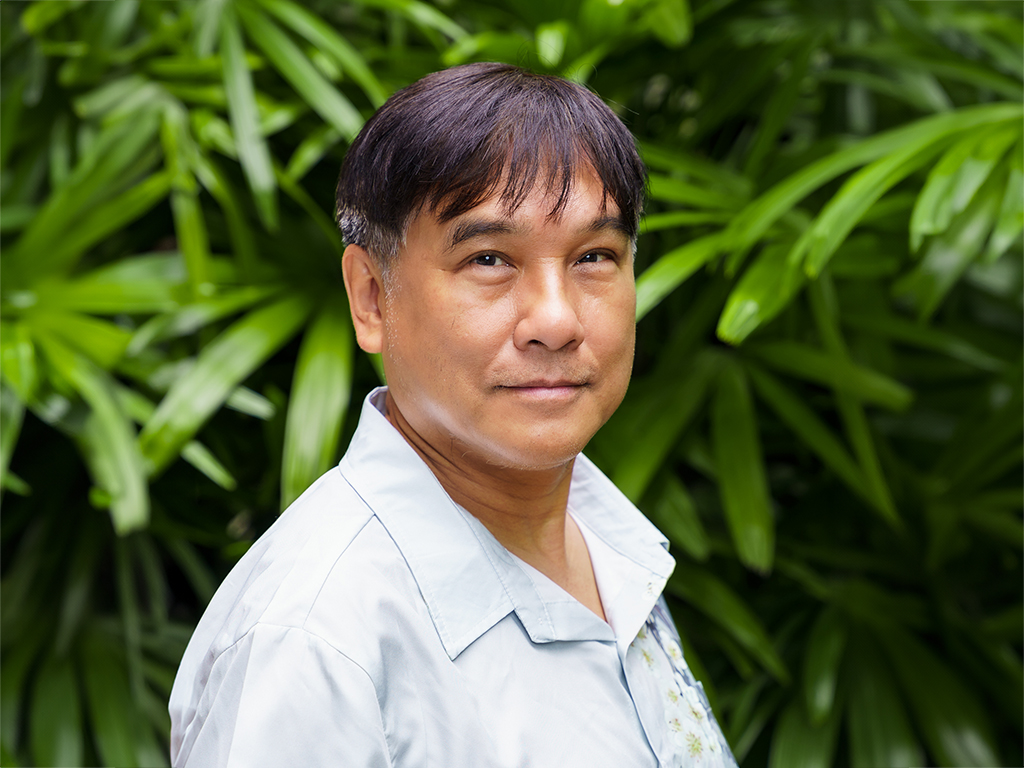
Chong Ho Yu.
HPU Professor and Program Director of Data Science and Artificial Intelligence Chong Ho “Alex” Yu, Ph.D., is helping educators navigate the fast-changing landscape of artificial intelligence (AI) in the classroom as co-author of a new book chapter on large language models (LLMs). Yu’s chapter, “Responsible, Ethical, and Effective Use of LLMs in Higher Education,” opens the new CRC Press volume Future of Learning with Large Language Models: Applications and Research in Education, edited by Myint Swe Khine, László Bognár, and Ernest Afari.
In the chapter, Yu and co-author Sunny Chan lay out both the promise and the pitfalls of LLMs in higher education. On one hand, tools like ChatGPT can function as powerful research assistants and personalized tutors; on the other, over-reliance on AI can tempt students to cut corners, weaken their command of foundational skills, and erode their ability to generate original ideas and think independently.
To move beyond “use it/don’t use it” debates, the authors skillfully propose three directions for redesigning curriculum in the age of AI. First, they call for explicit instruction on the ethical and responsible use of LLMs, so students understand when and how these tools can appropriately support their work. Second, they argue for shifting coursework and assessment toward conceptual understanding, critical thinking, and creativity, while offloading repetitive, tedious tasks to AI where appropriate. Third, they emphasize teaching triangulation and fact-checking skills to counter LLM “hallucinations” and help students verify AI-generated information against trusted sources.
“LLMs can absolutely enrich learning, but only if they push students to think more deeply rather than less,” said Yu. “Our goal is not to ban the technology or surrender to it, but to design courses where AI becomes a catalyst for higher-order thinking, ethical awareness, and genuine academic integrity.”
Yu is a three-time recipient of the SAS Faculty Scholarship and the Distinguished SAS Educator Award. He brings a wealth of perspective to his work at the intersection of data, ethics, and education. His scholarship spans data science methodology, cross-cultural analysis, and the ethical implications of emerging technologies, placing him firmly at the forefront of global conversations about artificial intelligence, fairness, and the future of learning.